First Drafts - Tojuro's Love
A translation of Tojuro no Koi, a short story about Sakata Tojuro I, an actual Kabuki actor, by Kan Kikuchi.
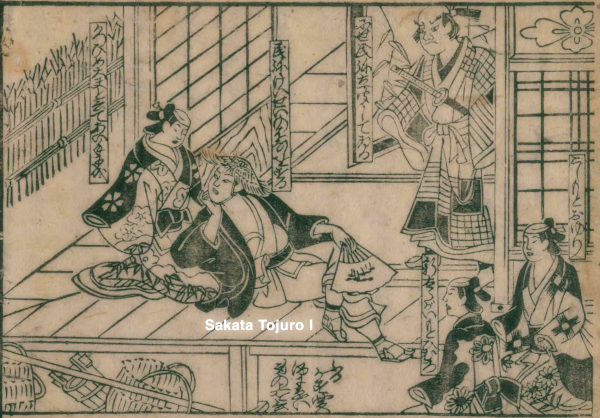
Source: Chikamatsu Monzaemon, Keisei Mibu Dainenbutsu, Act 3. Hachimonji-ya Hachizaemon, 1702 Debut Performance. NDL Digital Collections, https://dl.ndl.go.jp/pid/2541938 (Accessed February 24, 2026)
藤十郎の恋
菊池寛
Tojuro's Love
Kan Kikuchi
一
元禄《げんろく》と云う年号が、何時《いつ》の間にか十余りを重ねたある年の二月の末である。
都では、春の匂《にお》いが凡《すべ》ての物を包んでいた。ついこの間までは、頂上の処だけは、斑《まだら》に消え残っていた叡山《えいざん》の雪が、春の柔い光の下に解けてしまって、跡には薄紫を帯びた黄色の山肌《やまはだ》が、くっきりと大空に浮んでいる。その空の色までが、冬の間に腐ったような灰色を、洗い流して日一日緑に冴《さ》えて行った。
1
It was the end of February of some year more than ten years into the Genroku era. In Kyoto, the capital, the scent of spring engulfed everything. Until recently, only the last patches of snow on Mount Eizan at the summit melted under the soft light of spring. The bare yellow mountain surface with light purple bands distinctly floated in the vast sky. The stale grayness of winter was washed away day by day to a vivid green up to the color of that sky.
鴨《かも》の河原には、丸葉柳《まるはやなぎ》が芽ぐんでいた。その礫《こいし》の間には、自然咲の菫《すみれ》や、蓮華《れんげ》が各自の小さい春を領していた。河水は、日増《ひまし》に水量を加えて、軽い藍色《あいいろ》の水が、処々の川瀬にせかれて、淙々《そうそう》の響を揚げた。
Round willows sprouted on the ducks' sandy riverbank. Each naturally budding pansy and lotus dominated its own tiny spring among the pebbles. The river waters swelled everyday. The light indigo waters were driven along by scattered rapids and created babbling echoes.
黒木を売る大原女《おはらめ》の暢《の》びやかな声までが春らしい心を唆《そそ》った。江戸へ下る西国大名の行列が、毎日のように都の街々を過ぎた。彼等は三条の旅宿に二三日の逗留《とうりゅう》をして、都の春を十分に楽しむと、また大鳥毛《おおとりげ》の槍《やり》を物々しげに振立てて、三条大橋の橋板を、踏み轟《とどろ》かしながら、遙《はるか》な東路《あずまじ》へと下るのであった。
The springtime spirit excited the easygoing and open voices of women peddlers from Ohara selling bark-free lumber. Everyday, the column of a daimyo from the western provinces heading to Edo passed through the streets of the capital. They stayed in the travelers' inns in Sanjo for a few days, thoroughly enjoyed spring in the capital, solemnly brandished spears adorned with elaborate ceremonial otorige feathered plumes, and following the lengthy eastern road crossed the Sanjo Bridge, its wooden planks thundering underfoot.
東国から、九州四国から、また越路《こしじ》の端からも、本山参りの善男善女《ぜんなんぜんにょ》の群が、ぞろぞろと都をさして続いた。そして彼等も春の都の渦巻の中に、幾日かを過すのであった。
From the eastern provinces, Kyushu, Shikoku, and the edge of Koshi Province, droves of pious men and women on pilgrimages to the temples streamed to the capital and spent several days in the vortex of Kyoto in the springtime.
その裡《うち》に、花が咲いたと云う消息が、都の人々の心を騒がし始めた。祇園《ぎおん》清水《きよみず》東山《ひがしやま》一帯の花が先《ま》ず開く、嵯峨《さが》や北山《きたやま》の花がこれに続く。こうして都の春は、愈々《いよいよ》爛熟《らんじゅく》の色を為《な》すのであった。
が、その年の都の人達の心を、一番|烈《はげ》しく狂わせていたのは、四条中島|都万太夫座《みやこまんだゆうざ》の坂田藤十郎と山下半左衛門座の中村七三郎との、去年から持越しの競争であった。
Amid this, the hearts of the people in the capital were stirred by news of flowers starting to bloom. First, flowers opened in the band passing through Gion, Kiyomizu, and Higashiyama, followed by the flowers of Saga and Kitayama. Spring in the capital eventually became their colors in full bloom. However, the hearts of the people in the capital were stirred the most by the competition carried over from last year between Sakata Tojuro of the Miyako Mandayu-za theater troupe from Shijo Street in Nakajima and Nakamura Shichisaburo of the Yamashita Hanzaemon theater troupe.
三ヶ津の総芸頭《そうげいがしら》とまで、讃《たた》えられた坂田藤十郎は傾城買《けいせいかい》の上手《じょうず》として、やつし[#「やつし」に傍点]の名人としては天下無敵の名を擅《ほしいまま》にしていた。が、去年霜月、半左衛門の顔見世《かおみせ》狂言に、東から上った少長《しょうちょう》中村七三郎は、江戸歌舞伎の統領として、藤十郎と同じくやつし[#「やつし」に傍点]の名人であった。二人は同じやつし[#「やつし」に傍点]の名人として、江戸と京との歌舞伎の為にも、烈しく相争わねばならぬ宿縁を、持っているのであった。
Sakata Tojuro, who was honored with the name Sanga-no-tsu Sogeigashira [the leading actor of Edo, Osaka, and Kyoto], enjoyed his unrivaled reputation as a master of playing the role of the young man-about-town who buys a high-class courtesan in a Keiseikai courtesan play or in disguise as a lower-class character. However, in November of last year, Shocho Nakamura Shichisaburo came from the east with the Hanzaemon troupe to perform in the prestigious annual Kaomise Kabuki plays. He was a master of disguise equal to Tojuro. As two men both famous as masters of disguise, one an actor of Edo-style Kabuki and the other of Kyoto-style Kabuki, their fate was an intense rivalry.
京の歌舞伎の役者達は、中村七三郎の都上りを聴いて、皆異常な緊張を示した。が、その人達の期待や恐怖を裏切って七三郎の顔見世狂言は、意外な不評であった。見物は口々に、
「江戸の名人じゃ、と云う程に、何ぞ珍らしい芸でもするのかと思っていたに、都の藤十郎には及び付かぬ腕じゃ」と罵《ののし》った。七三郎を譏《そ》しる者は、ただ素人《しろうと》の見物だけではなかった。彼の舞台を見た役者達までも、
「江戸の少長は、評判倒れの御仁じゃ、尤《もっと》も江戸と京とでは評判の目安も違うほどに江戸の名人は、京の上手にも及ばぬものじゃ。所詮《しょせん》物真似《ものまね》狂言は都のものと極わまった」と、勝誇るように云い振れた。が、七三郎を譏しる噂《うわさ》が、藤十郎の耳に入ると、彼は眉《まゆ》を顰《ひそ》めながら、
「われらの見るところは、また別じゃ。少長どのは、まことに至芸のお人じゃ。われらには、怖《おそ》ろしい大敵じゃ」と、只一人世評を斥《しりぞ》けたのであった。
The Kabuki actors in Kyoto heard of Nakamura Shichisaburo's coming to their town. Every one of them exhibited unusual strain. Betraying their expectations and fears, however, Shichisaburo's debut Kabuki Kaomise play received unexpectedly poor reviews. One spectator, scoffed, "I thought that so-called Edo master would possess amazing technique, but he lacks the competence of Kyoto's Tojuro."
Not only amateur spectators abused Shichisaburo, actors who saw his performance boasted triumphantly,
"Shocho of Edo is a gentleman who falls short of his reputation. As the standards for fame differ in Edo and Kyoto, the Edo virtuoso does not reach the level of proficient in Kyoto. Anyway, the impersonation Kabuki play was perfected in Kyoto."
However, when Tojuro heard the rumors criticizing Shichisaburo, he frowned and said, "Our perspective is different. Shocho is a consummate artist and a formidable foe to us."
One man dismissed the world's opinion.
二
果して藤十郎の評価は、狂っていなかった。顔見世狂言にひどい不評を招いた中村七三郎は、年が改まると初春の狂言に、『傾城《けいせい》浅間《あさま》ヶ|嶽《だけ》』を出して、巴之丞《とものじょう》の役に扮《ふん》した。七三郎の巴之丞の評判は、すさまじいばかりであった。
2
As expected, Tojuro's evaluation was not ludicrous. Nakamura Shichisaburo, who had invited negative criticism of his debut in a Kaomise play, played the role of Tomoenojo in Keisei Asama-ga-Dake [The High-Ranking Courtesan Asama-ga-Dake], the first Kabuki play performed in the spring of the new year. All the reviews of Shichisaburo's Tomoenojo claimed he was extraordinary.
藤十郎は、得意の夕霧《ゆうぎり》伊左衛門を出して、これに対抗した。二人の名優が、舞台の上の競争は、都の人々の心を湧《わ》き立たせるに十分であった。が新しき物を追うのは、人心の常である。
To counter this, Tojuro appeared as Izaemon in the triumphant Yugiri. The on-stage competition between the two stars was enough to quicken the hearts of the people in the capital. However, the pursuit of novelty is human nature.
口性《くちさが》なき京童《きょうわらべ》は、
「藤十郎どのの伊左衛門《いさえもん》は、いかにも見事じゃ、が、われらは幾度見たか数えられぬ程じゃ。去年の弥生《やよい》狂言も慥《たし》か伊左衛門じゃ。もう伊左衛門には堪能いたしておるわ。それに比ぶれば、七三郎どのの巴之丞は、都にて初ての狂言じゃ。京の濡事師《ぬれごとし》とはまた違うて、やさしい裡《うち》にも、東男《あずまおとこ》のきついところがあるのが、てんと堪《たま》らぬところじゃ」と口々に云い囃《はや》した。
All at once, gossipy Kyoto natives spread rumors.
"Tojuro's Izaemon is utterly amazing. I can't count how many times I've seen it. Last year's spring kabuki play was certainly Izaemon, too. He's at his best as Izaemon. Compared to him, Shichisaburo's Tomoenojo is his first performance in a Kabuki play in the capital. Different from a romantic leading man in Kyoto, he's kindhearted and has the tough characteristics of a Tokyo man, but I was awestruck by some moments."
動き易《やす》い都の人心は、十年|讃嘆《さんたん》し続けた藤十郎の王座から、ともすれば離れ始めそうな気勢《けはい》を示した。万太夫座の木戸よりも、半左衛門座の木戸の方へと、より沢山の群衆が、流れ始めていた。
The easily-moved hearts of the people of the capital revealed that their enthusiasm was possibly starting to shift away from Tojuro's throne they had praised continuously for the past ten years. More crowds began to stream away from the wooden doors of Mandayu-za to those of Hanzaemon-za.
春狂言の期日が尽きると、万太夫座は直《す》ぐ千秋楽になったにも拘《かかわ》らず、半左衛門座は尚《なお》打ち続けた。二月に入っても、客足は少しも落ちなかった。二月が終りになって、愈々《いよいよ》弥生狂言の季節が、近づいて来たのにも拘わらず、七三郎は尚巴之丞の役に扮して、都大路の人気を一杯に背負うていた。
When the run of spring plays ended, despite Mandayu-za immediately holding its final performance, Hanzaemon-za continued its performances. After February began, the theatergoers did not dip, even a little. Although the March season of Kabuki plays was approaching, Shichisaburo played the role of Tomoenojo and fully shouldered his popularity on the main streets of the capital.
「半左衛門座では、弥生狂言も『傾城浅間ヶ嶽』を打ち通すそうじゃが、かような例は、玉村千之丞|河内《かわち》通いの狂言に、百五十日打ち続けて以来、絶えて聞かぬ事じゃ。七三郎どのの人気は、前代|未聞《みもん》じゃ」と、巷《ちまた》の風説《うわさ》は、ただこの沙汰《さた》ばかりのようであった。
"At Hanzaemon-za, he'll perform in Keisei Asama-ga-Dake, the March Kabuki play. This is unheard of since the 150 consecutive days of Tamagawa Sennojo performing in the Kabuki play, Kawagachi-ga-Yoi. Shichisaburo's popularity is unprecedented."
This was the talk of the town.
こうした噂《うわさ》が、かまびすしくなるにつれ、私《ひそか》に腕を拱《こまね》いて考え始めたのは、坂田藤十郎であった。
As these rumors grew louder, Sakata Tojuro crossed his arms in secret and began thinking.
三ヶ津総芸頭と云う美称を、長い間享受して来た藤十郎は、自分の芸に就《つい》ては、何等の不安もないと共に、十分な自信を持っていた。過ぐる未年《ひつじどし》に才牛《さいぎゅう》市川団十郎が、日本随市川のかまびすしい名声を担《にの》うて、東《あずま》からはるばると、都の早雲長吉座《はやぐもちょうきちざ》に上って来た時も、藤十郎の自信はビクともしなかった。
Tojuro, bestowed long ago with the poetic name of Sanga-no-tsu Sogeigashira had full confidence in and no anxiety about his artistic talent. With the end of the Year of the Goat, when Saigyu Ichikawa Danjuro became the most famous Ichikawa in Japan, when he took the stage at Hayagumo Chokichi-za far from Edo, Tojuro's confidence never faded.
『お江戸団十郎見しゃいな』と、江戸の人々が誇るこの珍客を見る為めに、都の人々が雪崩《なだれ》を為《な》して、長吉座に押し寄せて行った時も、藤十郎は少しも騒がなかった。殊《こと》に、彼が初めて団十郎の舞台を見た時に、彼は心の中で窃《ひそか》に江戸の歌舞伎を軽蔑《けいべつ》した。
"You have to see Edo's Danjuro."
In order to see this rare visitor, the pride of Edo, the people of the capital formed an avalanche and pushed toward Chokichi-za. This time, Tojuro didn't stir in the slightest. Especially the first time he saw Danjuro perform, in his heart, he secretly mocked the Kabuki of Edo.
彼は、団十郎が一流編み出したと云う荒事を見て、何と云う粗野な興ざめた芸だろうと思って、彼の腹心の弟子の山下京右衛門が、
「太夫《たゆう》様、団十郎の芸をいかが思召《おぼしめ》さる、江戸自慢の荒事とやらをどう思召さる」と訊《き》いた時、彼は慎《つつ》ましやかな苦笑を洩《もら》しながら「実事《じつごと》の奥義の解せぬ人達のする事じゃ。また実事の面白さの解せぬ人達の見る芝居じゃ」と、一言の下に貶《けな》し去った。が今度の七三郎に対しては、才牛をあしろうたようには行かなかった。
He saw Edo's first-rate, energetic, aragoto acting style conceived by Danjuro and believed the performance lacked refinement and was a disappointment. When his close confidant and disciple, Yamashita Kyoemon, asked, "Sensei, what do you think of Danjuro's talent and aragoto, the pride of Edo?"
He hinted a reserved smile and dismissed it with these words.
"These people do not grasp the essence of reality. And the play is watched by people who don't understand the interesting nature of reality."
This time, he did not use Saigyu to refer to Shichisaburo.
三
と、云って藤十郎は、妄《むげ》に七三郎を恐れているのではない。もとより、団十郎の幼稚な児騙《ちごだま》しにも似た荒事とは違うて、人間の真実な動作《しうち》をさながらに、模《うつ》している七三郎の芸を十分に尊敬もすれば、恐れもした。が、藤十郎は芸能と云う点からだけでは、自分が七三郎に微塵《みじん》も劣らないばかりでなく、寧《むし》ろ右際勝《みぎわまさ》りであることを十分に信じた。従って、今まで足り満ちていた藤十郎の心に不安な空虚と不快な動揺とを植え付けたのは、七三郎との対抗などと云う事よりも、もっと深いもっと本質的なある物であった。
3
That said, Tojuro did not foolishly fear Shichisaburo. From the beginning, in contrast to the aragoto style that resembled Danjuro's tricks to dupe children, he feared gaining too much respect for Shichisaburo's talent that copied the true actions of human beings. Only from the perspective of artistic talent, Tojuro fully believed he was not the least bit inferior to Shichisaburo and confident he would triumph at the right moment. Consequently, the anxious void and uncomfortable agitation planted in Tojuro's heart, which previously felt fulfilled, was more profound and substantive than merely saying it was the competition with Shichisaburo.
彼は、二十の年から四十幾つと云う今まで、何の不安もなしに、濡事師《ぬれごとし》に扮《ふん》して来た。そして、藤十郎の傾城買《けいせいかい》と云えば、竜骨車《りゅうこしゃ》にたよる里の童にさえも、聞えている。また京の三座見物達も藤十郎の傾城買の狂言と言えば、何時もながら惜し気もない喝采《かっさい》を送っていた。彼が、伊左衛門の紙衣姿《かみこすがた》になりさえすれば、見物はたわいもなく喝采した。少しでも客足が薄くなると、彼は定まって、伊左衛門に扮した。しかも、彼の伊左衛門役は、トラムプの切札か何かのように、多くの見物と喝采とを、藤十郎に保証するのであった。
From the age of twenty to now in his early forties, he has played leading men and never felt anxious. As for Tojuro's Keiseikai roles as a young man pursuing a high-class courtesan, even the children in villages still depending on waterladder pumps heard of him. The audiences in the three theaters in Kyoto also talked about Tojuro's Keiseikai Kabuki plays and showered him with praise. If he dressed in the paper garments of Izaemon, the audience applauded without a second thought. When the theatergoers fell off just a little, he played Izaemon. Moreover, like an ace up his sleeve, his Izaemon ensured a full house and applause for Tojuro.
が、彼は心の裡《うち》で、何時《いつ》となしに、自分の芸に対する不安を感じていた。いつも、同じような役に扮して、舌たるい傾城を相手の台詞《せりふ》を云うことが、彼の心の中に、ぼんやりとした不快を起すことが度《たび》重なるようになっていた。が、彼は未《ま》だいいだろう、未だいいだろうと思いながら一日延ばしのように、自分の仕馴《しな》れた喝采を獲《う》るに極《きま》った狂言から、脱け出そうと云う気を起さなかったのである。
In no time, however, he was anxious about his talent in his heart. He always played the same role and spoke his lines to a slow-talking courtesan. Inklings of vague discomfort occurred again and again in his heart. As if delaying for another day, he thought, It's probably still fine … it's probably fine. He felt no need to slip away from the perfect Kabuki play that provided him with the accustomed applause.
こうした藤十郎の心に、怖《おそ》ろしい警鐘は到頭伝えられたのだ。「また何時もながら伊左衛門か、藤十郎どのの紙衣姿は、もう幾度見たか、数えきれぬ程じゃ」と、云う巷《ちまた》の評判は、藤十郎に取っては致命的な言葉であった。彼が、怖れたのは七三郎と云う敵ではなかった。彼の大敵は、彼自身の芸が行き詰まっていることである。今までは、比較される物のない為に、彼の芸が行き詰まっている事が、無智な見物には分らなかったのである。
Frightening alarm bells were finally transmitted to Tojuro's heart.
"Once again, I can't count how many times I have seen the paper clothes of Izaemon or Tojuro."
These words in the public opinion were fatal to Tojuro. However, he did not fear the rivalry with Shichisaburo. His great rival was hitting a dead end in his talent. Because nothing comparable had ever happened, the unschooled spectators did not understand this dead end in his talent.
彼は、七三郎の巴之丞を見た時に、傾城買の世界とは、丸きり違った新しい世界が、舞台の上に、浮き出されている事を感じない訳には、行かなかった。ただ浮ついた根も葉もないような傾城買の狂言とは違うて、一歩深く人の心の裡に踏み入った世界が、舞台の上に展開されて来るのを認めない訳には行かなかった。見物は、傾城買の狂言から、たわいもなく七三郎の舞台へ、惹《ひ》き付けられて行った。が、藤十郎は、見物のたわいもない妄動《もうどう》の裡に、深い尤《もっと》もな理由のあるのを、看取しない訳には行かなかったのである。
When he saw Shichisaburo's Tomoenojo, he certainly felt that a new world completely different from the world of Keiseikai had been vividly revealed on stage. In contrast to a frivolous Keiseikai Kabuki play, he recognized that a world stepping deeper into the hearts of more discerning people had unfolded on stage. The audience was effortlessly drawn to Shichisaburo's performance from the Keiseikai play. However, Tojuro recognized the deeper reason behind the foolish agitation of the theatergoers.
小手先の芸の問題ではなかった。彼は、もっと深い大切なところで、若輩の七三郎に一足取残されようとしたのである。七三郎の巴之丞が、洛中《らくちゅう》洛外の人気を唆《そそ》って、弥生狂言をも、同じ芸題《だしもの》で打ち続けると云う噂を聞きながら、藤十郎は烈しい焦躁《しょうそう》と不安の胸を抑えて、じっと思案の手を拱《こま》ぬいたのである。その時に、ふと彼の心に浮んだのは、浪華《なにわ》に住んでいる近松門左衛門の事であった。
The problem was not a shallow performance. At the most profound and important moment, he seemed on the verge of leaving the young Shichisaburo behind. Shichisaburo's Tomoenojo was hugely popular in central Kyoto and its outskirts. While he heard the rumor that the March Kabuki play would continue with the same program, Tojuro suppressed the feelings of intense agitation and anxiety in his chest and sat quietly in contemplation with hands folded. During this time, Chikamatsu Monzaemon suddenly came to mind.
四
それは、二月のある宵であった。四条|中東《ちゅうとう》の京の端、鴨川《かもがわ》の流近く瀬鳴《せなり》の音が、手に取って聞えるような茶屋|宗清《むねせい》の大広間で、万太夫座の弥生狂言の顔つなぎの宴が開かれていた。
4
It happened one February evening. A social mixer banquet for the spring Kabuki play of the Mandayu-za theater was held in the large hall of the Munesei teahouse where the sounds of the eastern edge of Kyoto near Shijo Street and the nearby roar of the rapids of the Kamogawa River were vividly heard.
広間の中央、床柱を背にして、銀燭《ぎんしょく》の光を真向に浴びながら、どんすの鏡蒲団《かがみぶとん》の上に、悠《ゆ》ったりと坐り、心持|脇息《きょうそく》に身を靠《もた》せているのは、坂田藤十郎であった。茶せん[#「せん」に傍点]に結った色白の面は、四十を越した男とは、思われぬ程の美しさに輝いて見えた。
While propped against an alcove pillar in the center of the hall and directly bathing in light from silver candles and leisurely sitting on a glossy futon of donsu silk, Sakata Tojuro comfortably leaned his body on an armrest. The pale face with delicate features of this man over forty seemed to radiate an unexpected beauty.
下には鼠縮緬《ねずみちりめん》の引《ひっ》かえしを着、上には黒|羽二重《はぶたえ》の両面芥子人形《ふたつめんけしにんぎょう》の加賀紋《かがもん》の羽織を打ちかけ、宗伝唐茶《そうでんからちゃ》の畳帯をしめていた。藤十郎の右に坐っているのは、一座の若女形《わかおやま》の切波千寿《きりなみせんじゅ》であった。
He wore a gray crepe liner beneath, a crested haori jacket of a double-sided keshi wooden doll pattern in black habutae silk on top, and closed by a tatami obi sash, brown like Soden-style tea. Seated to Tojuro's right was Kirinami Senju, a young onnagata performer [male actor who plays women's roles] in one troupe.
白小袖《しろこそで》の上に、紫縮緬の二つ重ねを着、虎膚天鵞絨《とらふびろうど》の羽織に、紫の野良帽子《やろう》をいただいた風情《ふぜい》は、さながら女の如く艶《なま》めかしい、この二人を囲んで、一座の道化方、くゎしゃ[#「くゎしゃ」に傍点]方、若衆方などの人々が、それぞれ華美な風俗の限を尽して居並んでいた。
その中に、只一人千筋の羽織を着た質素な風俗をした二十五六の男は、万太夫座の若太夫であった。彼は、先刻から酒席の間を、彼方此方《あっちこっち》と廻って、酒宴の興を取持っていたが、漸《ようや》く酩酊《めいてい》したらしい顔に満面の微笑を湛《たた》えながら、藤十郎の前に改めて畏《かしこ》まると、恐る恐る酒盃《さかずき》を前に出した。
The elegance conveyed by the two layers of purple crepe silk worn over his white short-sleeve kimono, his haori jacket of tiger velvet, and a purple farmer's hat was seductive like a woman. The actors encircling these two played the clowns, women in the brothels and teahouses, and young men or servants in the theater. They stood in lines, dressed in the most extravagant attire.
Among them, only one man, a junior performer of Mandayu-za, a twenty-five- or -six-year-old was dressed simply in a striped haori jacket. For a while, he walked around the drinking party to enliven the mood. He wore a full smile on his tipsy face when he bowed again before Tojuro and timidly held out a sake cup.
「さあ、もう一つお受け下されませ。今度の弥生狂言は、近松様の趣向で、歌舞伎始まっての珍らしい狂言じゃと、都の中はただこの噂ばかりじゃげにござります。傾城買の所作《しょさ》は日本無双と云われた御身様《おみさま》じゃが、道ならぬ恋のいきかた[#「いきかた」に傍点]は、又格別の御思案がござりましょうなハハハハ」と、巧な追従《ついしょう》笑いに語尾を濁した。と、藤十郎と居並んでいる切波千寿は、急に美しい微笑を洩《もら》しながら、
「ホンに若太夫殿の云う通じゃ。藤十郎様には、その辺の御思案が、もうちゃんと付いている筈《はず》じゃ。われなどは、ただ藤十郎様に操《あやつ》られて傀儡《くぐつ》のように動けばよいのじゃ」と、合槌《あいづち》を打った。
"Oh, please have another. The spring Kabuki play this time was Chikamatsu's idea. They say it's a rare play from Kabuki's beginnings. Only this rumor seems to be making the rounds in the capital. Your acting in a Keiseikai play is said to be unrivaled in all of Japan. The ways with forbidden love probably needs careful deliberation by you. Ha, ha, ha."
He ended his comment with cunning, fawning laughter. Kirinami Senju seated next to Tojuro suddenly slipped a lovely smile and said, "Indeed, it's as the young actor says. You have certainly given it due consideration. We are fine with being manipulated by you and moved like puppets." He nodded for emphasis.
藤十郎は、若太夫の差した酒盃を、受け取りはしたものの、彼の言葉にも、千寿の言葉にも、一言も返しをしなかった。彼は、酒の味が、急に苦くなったように、心持顔を顰《しか》めながら、グット一気にその酒盃を飲み乾《ほ》したばかりであった。
彼は、今宵《こよい》の酒宴が、始まって以来、何気ない風に酒盃を重ねてはいたものの、心の裡《うち》には、可なり烈しい芸術的な苦悶《くもん》が、渦巻いているのであった。
Tojuro filled the sake cup held out by the young actor but had no response to his or Senju's words. As if the taste of sake abruptly turned bitter, he frowned with displeasure and only wanted to empty the sake cup in a gulp.
From the beginning of the night's drinking party, Tojuro had been casually stacking sake cups, but inside his heart was fierce artistic torment trapped in a whirlpool.
彼が、近松門左衛門に、急飛脚を飛ばして、割なく頼んだことは、即座に叶《かな》えられたのであった。今までの傾城買とは、裏と表のように、打ち変った狂言として、門左衛門が藤十郎に書与えた狂言は、浮ついた陽気なたわいもない傾城買の濡事とは違うて、命を賭《と》しての色事であった。
打ち沈んだ陰気な、懸命な命を捨ててする濡事であった。芸題は『大経師《だいきょうじ》昔暦《むかしごよみ》』と云って、京の人々の、記憶にはまだ新しい室町《むろまち》通の大経師の女房おさんが、手代《てだい》茂右衛門《もえもん》と不義をして、粟田口《あわたぐち》に刑死するまでの、呪《のろ》われた命懸けの恋の狂言であった。
His urgent request to send a fast messenger to Chikamatsu Monzaemon was immediately fulfilled. The present Keiseikai was a Kabuki play entirely transformed, front to back, for Tojuro by Monzaemon. This love affair differed from the lively, lighthearted love affairs typical of Keiseikai by putting lives at risk.
The love affair threw out gloomy, desperate lives. The title of the performance was called The Ancient Calendar of the Great Puppet Master. It was a Kabuki play of cursed love that endangered lives. In this play, Osan, the wife of the great puppet master on the still new Muromachi Street in the memories of the people of Kyoto, has an illicit affair with a male servant, Moemon, and is executed in Awadaguchi.
藤十郎の芸に取って、其処《そこ》に新しい世界が開かれた。がそれと同時に、前代|未聞《みもん》の狂言に対する不安と焦慮とは、自信の強い彼の心にも萌《きざ》さない訳には行かなかった。
A new world was opened for Tojuro's talent. At the same time, the anxiety and distress over the unprecedented Kabuki play could not help but stir his normally self-assured heart.
五
藤十郎の心に、そうした屈託があろうとは、夢にも気付かない若太夫は、芝居国の国王たる藤十郎の機嫌《きげん》を、如何《いか》にもして取結ぼうと思ったらしく、
「この狂言に比べましては、七三郎殿の『浅間ヶ嶽』の狂言も童《わらべ》たらしのように、曲ものう見えまするわ。前代未聞の密夫《みそかお》の狂言とは、さすがに門左衛門様の御趣向じゃ。それに付けましても、坂田様にはこうした変った恋のお覚えもござりましょうなハハハハ」と、時にとっての座興のように高々と笑った。
5
The young actor's wildest dreams would have never imagined this possible concern in Tojuro's heart. Some way or another, he attempted to placate Tojuro's mood.
"Compared to this Kabuki play, Shichisaburo's performance in Asama-ga-Dake seemed suspicious, as if he were trying to coax a child. The unprecedented play about a secret lover is expected given Monzaemon's tastes. Furthermore, Sakata-sama, you may have memories of a similar unusual love. Ha, ha, ha, ha."
He laughed heartily.
今まで、おし黙っていた藤十郎の堅い唇《くちびる》が、綻《ほころ》びたかと思うと、「左様な事、何のあってよいものか」と、苦りきって吐き出すように云った。「藤十郎は、生れながらの色好みじゃが、まだ人の女房と念頃《ねんごろ》した覚えはござらぬわ」と、冷めたい苦笑を洩《もら》しながら付け加えた。若太夫は、座興の積《つもり》で云った諧謔《たわむれ》を、真向《まっこう》から突き飛ばされて、興ざめ顔に黙ってしまった。
When he thought Tojuro's lips, tightly closed until now, had opened, they bitterly spat out, "How is that good?"
He added, while smiling wryly, "I'm a born womanizer, but you have no memory of my having an intimate relationship with another man's wife."
The young actor's humorous remark was brushed aside. Now, he looked disappointed and fell silent.
傍に坐っていた切波千寿は、一座が白けるのを恐れたのであろう。取做《とりな》し顔に、微笑を含みながら、
「ほんに、坂田様の云われる通じゃ。この千寿とても、主ある女房と、念ごろした事はないわいな」と、云いながら女のように美しい口を掩《おお》うた。
Kirinami Senju seated beside him probably feared a collapse of the gathering's mood. Wearing a conciliatory expression, a smile, he said, "What Sakata-sama says is true. Let me tell you, even I have never been affectionate with a married woman." As he spoke, he covered his beautiful mouth like a woman.
が、藤十郎は、前よりも一際《ひときわ》、苦りきったままであった。彼は今心の裡で、僅《わず》か三日の後に迫った初日を控えて、芸の苦心に肝胆を砕いていたのである。彼に取って、其処《そこ》に可なり危険な試金石が横《よこた》わっている。『あれ見よ、密夫の狂言とは、名ばかりで相も変らぬ藤十郎じゃ』と、云われては、自分の芸は永久に廃《すた》れるのだと、彼は心の裡に、覚悟の臍《ほぞ》を堅めていた。ただ、相手の傾城が、人妻に変ったばかりで、昔ながらの藤十郎だとは、夢にも云わせてはならないと、心の裡に思い定めていた。
Tojuro was more bitter than before. In the days leading to opening day, just three days away, he dedicated himself entirely to the struggles of his art. A fairly perilous test lay there.
"Look! A Kabuki play about a secret lover is called, as always by name only, Tojuro."
In his heart, he was firmly resolved for his art to go out of vogue forever. The courtesan usually in the role opposite him was merely changed into another man's wife. He was determined in his heart not to be called, even in a dream, the Tojuro of the olden days.
が、それかと云って、藤十郎は、自分で口に出して云った通、道ならぬ恋をした覚はさらさらなかったのである。元より、歌舞伎役者の常として、色子《いろこ》として舞台を踏んだ十二三の頃から、数多くの色々の色情生活を閲《けみ》している。
四十を越えた今日までには幾十人の女を知ったか分らない。彼の姿絵を、床の下に敷きながら、焦《こが》れ死んだ娘や、彼に対する恋の叶《かな》わぬ悲しみから、清水《きよみず》の舞台から身を投げた女さえない事はない。が、こうした生活にも拘《かかわ》らず、天性|律義《りちぎ》な藤十郎は、若い時から、不義非道な色事には、一指をだに染めることをしなかった。
Even so, as Tojuro said, he had never had an illicit love affair. From around the age of twelve or thirteen when he first stepped on stage as a mistress, normal for a Kabuki actor, he closely studied countless amorous lives.
Until now, past the age of forty, he didn't know how many women he had known. It's not that no young woman lay a portrait of him under the floor and died of longing from sorrow, or a woman sacrificed herself by leaping from the high balcony at Kiyomizu Temple because of the sorrow of unrequited love for him. In spite of this sort of life, since his youth, the innately honest Tojuro never sullied one finger in an illicit affair.
そうした誘惑に接する毎《ごと》に、彼は猛然として、これと戦って来ている。彼が、役者にも似合わず『藤十郎殿は、物堅い御仁じゃ』と、云われて、芝居国の長者として、周囲から、尊敬されているのも、一つにはこうした訳からでもあった。
He fiercely fought each encounter having that temptation. Unlike most actors, they said, "Tojuro is a serious gentleman." He was a man respected by those around him because of his prominence in the theater world.
従って、彼は、過去の経験から、人妻を盗むような必死な、空恐ろしい、それと同時に身を焼くように烈《はげ》しい恋に近い場合を、色々と尋ねてみたが、彼のどの恋もどの恋も極めて正当な、物柔かな恋であって、冬の海のように恐ろしい恋や、夏の太陽のような烈しい恋の場合は、どう考えても頭に浮んでは来なかった。
Consequently, he asked various questions drawn from past experiences about a situation close to a love frantic and terrifying, like stealing another man's wife, and simultaneously violent, like burning with desire. Whichever love of his is an extremely proper, gentle love. No matter how he thought about it, a terrifying love like the winter sea, or a fierce love like the summer sun, never crossed his mind.
六
傾城買《けいせいかい》の経緯《いきさつ》なれば、どんなに微妙にでも、演じ得ると云う自信を持った藤十郎も、人妻との呪《のろ》われた悪魔的な、道ならぬ然《しか》し懸命な必死の恋を、舞台の上にどう演活《しいか》してよいかは、ほとほと思案の及ばぬところであった。これまでの歌舞伎狂言と云えば、傾城買のたわいもない戯れか、でなければ物真似《ものまね》の道化に尽きていた為に、こうした密夫《みそかお》の狂言などに、頼《たのま》れるような前代の名優の仕残した型などは、微塵《みじん》も残っていなかった。
6
Whatever the details of a Keiseikai story, Tojuro had confidence in his acting and never fully considered the best way to perform on stage an illicit but desperate love, namely, a cursed demonic relationship with a married woman. Haven't Kabuki plays been the frivolous amusement of buying a courtesan? If not, the acting style passed down by dependable actors of the previous generation left nothing to explore in plays about a secret lover, and his acting would be reduced to mimicry by a buffoon.
それかと云って、彼はこうした場合に、打ち明けて智慧《ちえ》を借るべき、相談相手を持っていなかった。彼の茂右衛門に、おさんを勤める切波千寿は、天性の美貌《びぼう》一つが、彼の舞台の凡《すべ》てであった。ただ、藤十郎の指図のままに、傀儡のごとく動くのが、彼の演伎《えんぎ》の凡てであったのだ。 藤十郎は、自分自身の肝脳《あたま》を搾《しぼ》るより外には、工夫の仕方もなかったのである。
That said, he needed to open up and seek advice concerning this situation but had no confidant. Kirinami Senju, who played Osan to his Moemon, had natural beauty, which was all he brought to the stage. However, his movements as a puppet under Tojuro's commands were his entire performance.
Tojuro had no clever device other than to wrack his own brain.
藤十郎の不機嫌の背後に、そうした根本的な屈託が、潜んでいるとは気のつかない一座の人々は、白け始めようとする酒宴の座を、どうかして引き立たせようと、思ったのだろう、五十に手の届きそうな道化方の老優は、傍《そば》に坐っていた二十を出たばかりの、野良帽子《やろう》を着た美しい若衆方を促し立てながら、おどけた連舞《つれまい》を舞い始めた。
The people in the party were oblivious to the fundamental worry behind Tojuro's bad mood and wondered how to invigorate the banquet party that was beginning to wilt. An older Kabuki jester nearing fifty started to dance a silly dance while egging on the beautiful young man, barely over twenty, seated beside him and wearing the farmer's hat.
藤十郎は、二人の舞を振向きもしないで、日頃には似ず、大杯を重ねて四度ばかり、したたかに飲み乾すと、俄《にわか》に発して来た酔に、座には得《え》堪《た》えられぬように、つと席を立ちながら、河原に臨んだ広い縁に出た。
Tojuro did not turn toward the couple's dance and emptied the large sake cup four times. This was unusual for him, and he was instantly drunk. As though he was unable to stay in his seat, he suddenly stood up and went out to the spacious veranda overlooking the riverbank.
河原の闇《やみ》の底を流れる川水が、ほのかな光を放っている外は、晦日《みそか》に近い夜の空は曇って、星一つさえ見えなかった。声ばかり飛び交うているかのように、闇のなかに千鳥が、ちちと鳴きしきっていた。
Except for the river water flowing along the dark bottom of the riverbank emitting faint light, the evening sky close to the last day of the month was cloudy. Not even one star could be seen. In the darkness, plovers incessantly chirped, "Chee-chee," as if their voices alone were flying around.
歌舞伎の長者として、王者のように誇を、持っていた藤十郎の心も、蹴合《けあわ》せに負けた鶏《とり》のように悄気《しょげ》きってしまっていた。彼が、座を立った為に、上からの圧迫の取れたように、急にはずみかけた酒宴の席のさわがしいどよめきを、後《あと》にしながら、彼は知らず知らず静寂な場所を求めて、勝手を知った宗清の部屋々々を通り抜けながら、奥の離座敷を志した。
Tojuro's heart felt a king's pride as a prominent Kabuki performer and was quiet like a rooster defeated in a fight. As he moved behind the escalating rowdy noise of the seated participants to remove the pressure from above, without realizing it, he was searching for a quiet place. He headed for an interior cottage while passing through the familiar rooms of the Munesei.
母屋《おもや》からは一段と、河原の中に突出ている離座敷には、人の気勢《けはい》もなかった。ただほんのりと灯《とも》っている、絹行燈《きぬあんどん》の光の裡に、美しい調度などが、春の夜に適《ふさわ》しい艶《なま》めいた静けさを保っていた。藤十郎は、人影の見えぬのを心の中に欣《よろこ》んだ。彼は、床の間に置いてあった脇息《きょうそく》を、取り下すと、それに右の肱《ひじ》を靠《もた》せながら、身を横ざまに伸したのである。
There was none of the human fervor one step up from the main room in the cottage projecting out to the riverbank. The beautiful furnishings inside faint light from a single silk lantern preserved radiant serenity befitting a spring evening. In his heart, Tojuro relished not seeing any human figure. He picked up an armrest in the alcove and leaned on his right elbow to stretch out his body to the side.
が、騒々しい酒宴の席から、身を脱《のが》れた欣びは、直《す》ぐ消えてしまって、芸の苦心が再びひしひしと胸に迫って来る。明日からは稽古《けいこ》が始まる。肝腎要《かんじんかなめ》の茂右衛門の行き方が、定《きま》らいでは相手のおさんも、その他の人々もどう動いてよいか、思案の仕様もないことになる。
The joy of his body escaping the seats of the raucous drinking party immediately disappeared and the struggles of his art again pressed heavily on his chest. Rehearsals will start tomorrow. When he had not determined the essential direction of Moemon, he had no idea how Osan, the role opposite to his, and the other people should act.
己《おの》が工夫が拙《まず》うては、近松門左が心を砕いた前代未聞の狂言も、あたら京童の笑い草にならぬとも限らない。こう思いながら、藤十郎は胸の中に渦巻いている、もどかしさを抑えながら、一途《いちず》に心をその方へ振り向けようとあせった。 その時である。母屋の方から、とんとんと離座敷を指して来る人の足音が、聞えて来た。
If my efforts fall short, regrettably, the unprecedented play that Chikamatsu Monzaemon poured his heart into will only be mocked by the children of Kyoto. As he thought this and suppressed the frustration swirling in his chest, Tojuro was determined to quickly point his mind in that direction.
At that moment, he heard the sounds of loud footsteps approaching from the main room to the cottage.
七
折角、さわがしい酒席を逃《のが》れて、求め得た静かな場所で、芸の苦心を凝らそうと思っていた藤十郎は、自分の方へ近づいて来る人の足音を聞いて、心持|眉《まゆ》を顰《しか》めぬ訳には行かなかった。
7
With great effort, Tojuro escaped the noisy drinking party and found a quiet place to devote himself to pondering the struggles of his art. He could not help but frown at the sounds of footsteps coming his way.
が、近づいて来る足音の主は、此処《ここ》に藤十郎が居ようなどとは、夢にも気付かないらしく、足早に長い廊下を通り抜けて、この部屋に近づくままに、女性らしい衣《きぬ》ずれの音をさせたかと思うと、会釈もなく部屋の障子を押し開いた。が、其処《そこ》に横たわっていた藤十郎の姿を見ると、吃驚《びっくり》して敷居際《しきいぎわ》に立ち竦《すく》んでしまった。
However, the owner of the approaching footsteps rapidly passing down the long hallway seemed to be unaware, even in a dream, of Tojuro’s presence. Just when he thought he heard the rustling of women’s clothes near the room, the shoji sliding door was pushed open with no greeting. The visitor froze at the sight of Tojuro’s body in profile.
「あれ、藤《とう》様はここにおわしたのか。これはこれはいかい粗相を」と、云いながら、女は直ぐ障子を閉ざして、去ろうとしたが、又立ち直って、「ほんに、このように冷える処で、そうして御座って、御|風邪《かぜ》など召すとわるい。どれ、私が夜のものをかけて進ぜましょう」と、云いながら、部屋の片隅《かたすみ》の押入から、夜具を取り下ろそうとしている。
“Oh, you're in here, Tojuro? Please, excuse the interruption.”
While speaking, the woman immediately readied to shut the door and leave, but she said, "It is quite cold to be sitting in here. It would be awful for the troupe if you caught a cold. I'll lay out the bedding."
She took out bedding from the closet in a corner of the room and laid it down.
藤十郎は、最初足音を聞いた時、召使の者であろうと思ったので、彼は寝そべったまま、起き直ろうとはしなかった。が、それが意外にも、宗清の主人|宗山清兵衛《むねやませいべえ》の女房お梶《かじ》であると知ると、彼は起き上って、一寸《ちょっと》居ずまいを正しながら、 「いやこれは、いかい御雑作じゃのう」と、会釈をした。
When Tojuro first heard the footsteps, he thought it was a servant and stayed reclining with no intention of sitting up. When he recognized the unexpected Kaji, wife of Muneyama Seibei, the proprietor of Munesei, he sat up. As he sat properly, he said, "Oh, I am such a bother," and bowed.
お梶は、もう四十に近かったが、宮川町の歌妓《うたいめ》として、若い頃に嬌名《きょうめい》を謳《うた》われた面影が、そっくりと白い細面の顔に、ありありと残っている。浅黄絖《あさぎぬめ》の引《ひき》かえしに折びろうどの帯をしめ、薄色の絹足袋《きぬたび》をはいた年増《としま》姿は、又なく艶《えん》に美しかった。藤十郎は、昔から、お梶を知っている。若衆方の随一の美形と云われた藤十郎が美しいか、歌妓のお梶が美しいかと云う物争いは、二十年の昔には、四条の茶屋に遊ぶ大尽達の口に上った事さえある。その頃からの馴染《なじみ》である。が、藤十郎は、今までに、お梶の姿を心にとめて、見たこともない。ただ路傍の花に対するような、淡々たる一|瞥《べつ》を与えていたに過ぎなかった。
Kaji was close to forty, but her face, known for its beauty in her younger days as a singer in Miyagawa-cho, vividly remained on the same white slender face. A folded-back obi sash of a pale yellow silk brocade closed the waist of the middle-aged figure wearing light-colored silk stockings. Without question, she was radiantly beautiful. Tojuro had known Kaji for many years. The dispute twenty years ago over whether Tojuro, said to be the best-looking young man, or the singer Kaji was prettier even came from the mouths of the wealthy men who frequented the teahouses on Shijo Street. They've been acquainted since then. Even now, Tojuro didn't commit to memory nor had truly seen Kaji's appearance. Like flowers on the side of the road, he cast a calm, indifferent glance.
が、今宵《こよい》は、この人妻の姿が、云い知れぬ魅力を以《もっ》て、ぐんぐんと彼の眼の中に、迫って来るのを覚えた。密夫《みそかお》と云う彼にとっては、未《いま》だ踏んでみた事のない恋の領域の事を、この四五日、一心に思い詰めていた為だろう。今までは余り彼の念頭になかった人妻と云う女性の特別な種類が、彼の心に不思議な魅力を持ち始めて、今お梶の姿となって、ぐんぐん迫って来るように覚えた。
Tonight, however, her inexplicable charm made him remember the rapid approach of this married woman's figure. To him, the secret lover, the realm of love he never had nor tried had been his sole obsession for the past four or five days. The particular type of woman called a wife hardly crossed his mind until now, but it began holding a mysterious charm in his mind and became this figure of Kaji, rapidly closing in on him.
藤十郎のお梶を見詰める眸《ひとみ》が、異常な興奮で、燃え始めたのは無論である。人妻であると云う道徳的な柵《しがらみ》が取払《とりはらわ》れて、その古木が却《かえ》って、彼の慾情を培《つちか》う、薪木《たきぎ》として投ぜられたようである。彼は、娘や後家や歌妓や遊女などに、相対した時には、かつふつ懐《いだ》いた事のないような、不思議な物狂わしい情熱が、彼の心と身体とを、沸々燃やし始めたのである。
Of course, Tojuro's eyes staring at Kaji started to burn with an unusual excitement. The ethical boundary called being a wife seemed to be swept away. Instead, that ancient tree cultivated his lust and was discarded as firewood. A mysterious wild passion never felt before when he faced a young woman, a widow, a songstress, or a prostitute, gripped him and started to fiercely burn in his mind and body.
八
藤十郎の心にそうした、物狂わしい※[#「風にょう+炎」、第4水準2-92-35]風《ひょうふう》が起っていようとは、夢にも気付かないらしいお梶《かじ》は押入れから白絖《しろぬめ》の夜着《よぎ》を取出すと、藤十郎の背後に廻りながら、ふうわりと着せかけた。
8
Inside Tojuro's mind a wild hail storm seemed to begin. Kaji unnoticed in his dreams took white silk nightclothes out of the closet. She turned toward Tojuro's back and gently draped it over him.
白鳥の胸毛か何かのように、暖い柔かい、夜着の感触を身体一面に味《あじわ》った時、藤十郎のお梶に対する異常な興奮は、危く爆発しようとした。が、彼の律義《りちぎ》な人格は、咄嗟《とっさ》に彼の慾情の妄動《もうどう》をきっぱりと、制し得たのである。藤十郎は、宗山清兵衛の事を考えた。また、貞淑と云う噂《うわさ》の高いお梶の事を考えた。そして自分が、今まで色事をしながらも、正しい道を踏み外《はず》さなかったと云う自分自身の誇を考えた。彼のお梶に対して懐いた嵐《あらし》のような激動は、忽《たちま》ち和《な》ぎ始めたのである。
When he felt the sensation of the warm, soft nightclothes, like the feathers of a white swan, on one side of his body, Tojuro's unusual excitement toward Kaji was dangerously close to exploding. His honest character decisively and immediately restrained any reckless actions. Tojuro thought about Muneyama Seibei. He thought about Kaji, famously rumored to be virtuous. He also thought, While I've had love affairs in the past, my pride kept me from straying from the righteous path. The turbulence like a storm harbored for Kaji immediately began to calm down.
お梶は、平素《いつも》の通のお梶であった。彼女は夜着を着せてしまうと「さあ、お休みなされませ。彼方《あちら》へ行ったら女どもに、水など運ばせましょうわいな」と、愛想笑いを残して足早に部屋を出ようとした。その刹那《せつな》である。藤十郎の心にある悪魔的な思付がムラムラと湧《わ》いて来た。それは恋ではなかった。それは烈《はげ》しい慾情ではなかった。それは、恐ろしいほど冷めたい理性の思付であった。恋の場合には可なり臆病《おくびょう》であった藤十郎は、あたかも別人のように、先刻の興奮は、丸きり嘘であったかのように、冷静に、
「お梶どの、ちと待たせられい」と、呼び止めた。
Kaji was the usual Kaji. As she dressed him in the nightclothes, she said, "Well, goodnight. If you go over there, the women can bring you water."
She forced a smile and quickly left the room. At that instant, demonic thoughts powerfully surged in Tojuro's mind. It was not love. It was not passionate lust. It was chillingly cold reasoning. Tojuro, who was fairly cowardly in the face of love, coldly called to stop her, "Kaji, please wait a moment," as if she were a stranger and the earlier excitement was a complete lie.
「何ぞ、外に御用があってか」と、お梶は無邪気に、振り返った。剃《そ》り落とした眉毛《まゆげ》の後が青々と浮んで見える色白の美顔は、絹行燈《きぬあんどん》の灯影《ほかげ》を浴びて、ほんのりと艶《なま》めかしかった。
She turned and asked nonchalantly, "Is there something else?"
Her beautiful pale face with visible blue remains of shaved eyebrows had a subtle allure in the glow of light from the silk lantern.
「ちと、御意を得たいことがある程に、坐ってたもらぬか」こう云いながら、藤十郎は、心持ち女の方へ膝《ひざ》をすすませた。
お梶は、藤十郎の息込み方に、少し不安を、感じたのであろう。藤十郎には、余り近寄らないで、其処に置いてある絹行燈の蔭に、踞《うずく》まるように坐った。
"I'd like to hear your opinion. Will you have a seat?" asked Tojuro as he dramatically slid toward her.
Kaji probably felt a little uneasy with Tojuro's breathing. Without getting too close to Tojuro, she sat as if crouching in the shadow of the silk lantern placed there.
「改まって何の用ぞいのうおほほほ」と、何気なく笑いながらも、稍《やや》面映《おもは》ゆげに藤十郎の顔を打ち仰いだ。藤十郎の声音《こわね》は、今までとは打って変って、低いけれども、然《しか》しながら力強い響を持っていた。
"Why the formality?" she said, smiling casually and slightly embarrassed, looking up at Tojuro. His voice suddenly changed. Although soft, it had a strong, forceful resonance.
「お梶どの。別儀ではござらぬが、この藤十郎は、そなたに二十年来隠していた事がある。それを今宵は是非にも、聴いて貰《もら》いたいのじゃ。思い出せば、古いことじゃが、そなた[#「そなた」に傍点]が十六で、われらが二十《はたち》の秋じゃったが、祇園祭《ぎおんまつり》の折に、河原の掛小屋で二人一緒に、連舞《つれまい》を舞うたことを、よもや忘れはしやるまいなあ。
"Kaji, it's nothing to worry about, but I've hidden something from you for twenty years. Tonight, I want you to hear this. Try to remember, it's a long time ago. You were sixteen. It was the fall of my twentieth year. At the time of the Gion Festival, you danced with another in a duet dance in a shed on the riverbank. I will surely never forget.
われらが、そなたを見たのは、あの時が初めてじゃ。宮川町のお梶どのと云えば、いかに美しい若女形《わかおやま》でも、足下にも及ぶまいと、兼々《かねがね》人の噂《うわさ》に聴いていたが、そなたの美しさがよもあれ程であろうとは、夢にも思い及ばなかったのじゃ」と、こう云いながら、藤十郎はその大きい眼を半眼に閉じながら、美しかった青春の夢を、うっとりと追うているような眼付をするのであった。
That was the first time I saw you. I often heard rumors that no beautiful, young female impersonator could measure up to Kaji of Miyakawa-cho. Not even in my dreams could I imagine your beauty."
While speaking, Tojuro half closed his large eyes as if he were pursuing a beautiful dream of youth.
九
「その時からじゃ。そなたを、世にも稀《まれ》な美しい人じゃと、思い染めたのは」と、藤十郎は、お梶の方へ双膝《もろひざ》を進ませながら、必死の色を眸《ひとみ》に浮べて、こう云いきった。
9
"Ah, since that time ... you have been a rare beauty in the world. Since then, I've been infatuated," said Tojuro, as his knees inched toward Kaji, and a look of desperation rose in his eyes.
藤十郎に呼び止められた時から、ある不安な期待に、胸をとどろかせていたお梶は最初はこの美しい男の口から、自分達の華《はな》やかな青春の日の、想出話《おもいでばなし》を聴かされて、魅せられたように、ほのぼのと二つの頬《ほお》を薄紅に染めていたが、相手の言葉が、急な転回を示してからは、その顔の色は刹那に蒼《あお》ざめて、蹲くまっている華奢《きゃしゃ》な身体《からだ》は、わなわなと戦《おのの》き始めていた。
From the moment Tojuro called to stop Kaji, her chest throbbed with nervous hope. For the first time, she heard a nostalgic story from the flamboyant days of their youth from the mouth of this beautiful man. Seemingly enchanted, her cheeks faintly blushed light pink. However, after her companion's words exhibited a quick reversal, the color of those cheeks paled instantly. Her crouching fragile body started to tremble.
藤十郎は、恋をする男とは、どうしても受取れぬ程の、澄んだ冷たい眼付で、顔さえ擡《もた》げ得ぬ女を刺し透《とお》す程に、鋭く見詰めていながら、声だけには、烈しい熱情に顫《ふる》えているような響を持たせて、
Tojuro's gaze was so piercing and cold, he could not be accepted as a man who loves. His sharp stare penetrated the woman, unable to lift her head. Only his voice echoed, trembling with intense passion.
「そなたを見染めた当座は、折があらば云い寄ろうと、始終念じてはいたものの、若衆方の身は親方の掟《おきて》が厳《きび》しゅうて、寸時も心には委《まか》せぬ身体じゃ。ただ心は、焼くように思い焦《こが》れても、所詮《しょせん》は機《おり》を待つより外はないと、諦《あきら》めている内に、二十の声を聞くや聞かずに、そなたは清兵衛殿の思われ人となってしまわれた。
その折のわれらが無念は、今思い出しても、この胸が張り裂くるようでおじゃるわ」こう云いながら、藤十郎は座にもえ堪《た》えぬような、巧みな身悶《みもだ》えをして見せたが、そうした恋を語りながらも、彼の二つの眸だけは、相変らず爛々《らんらん》たる冷たい光を放って、女の息づかいから容子《ようす》までを、恐ろしきまでに見詰めている。
"When I fell for you, I would have approached you if I had the chance. I constantly thought about you. I was in training with a master who had strict rules. My body could not be trusted in matters of the heart even for a moment. Although my heart burned with desire, ultimately, I could only wait for my chance. Whether you heard or didn't hear the resignation in my twenty-year-old voice, you became the person loved by Seibei. My regret at that time, even thinking about it now, rips apart my chest."
As if he could no longer bear to sit, Tojuro subtly made his body writhe. As he spoke of love, as usual, only his eyes radiated a cold light. He stared with terrifying intensity at everything from her breathing to her demeanor.
お梶の顔の色は、彼女の心の恐ろしい激動をさながらに、映し出していた。一旦蒼ざめきってしまった色が、反動的に段々薄赤くなると共に、その二つの眼には、熱病患者に見るような、直《すぐ》にも火が点《つ》きそうな凄《すさま》じい色を湛《たた》え始めた。
Kaji's complexion reflected the terrifying turmoil in her heart. She paled for a moment and then gradually blushed in reaction. Like a feverish patient, her eyes started to fill with an alarming color, like a fire about to start.
「人妻になったそなた[#「そなた」に傍点]を恋い慕うのは人間のする事ではないと、心で強《きつ》う制統しても、止まらぬは凡夫の想じゃ。そなたの噂《うわさ》を聴くにつけ、面影を見るにつけ、二十年のその間、そなた[#「そなた」に傍点]の事を忘れた日は、ただ一日もおじゃらぬわ」彼は、一語一語に、一句一句に巧な、今までの彼の舞台上の凡《すべ》ての演戯にも、打ち勝《まさ》った程の仕打を見せながら、しかも人妻をかき口説く、恐怖《おそれ》と不安とを交えながら、小鳥のように竦《すく》んでいる女の方へ、詰め寄せるのであった。
"To fall in love with you, a married woman, is not something a man does. Even if I forcibly control myself with my mind, the ordinary man thinks it can't be stopped. Each time I heard a rumor about you, each time I saw your face over those twenty years, there was not one day I forgot about you."
In each word and phrase, his acting surpassed all his previous performances on stage. Moreover, as he seduced the married woman, he closed in on her, as she cowered like a small bird in a mixture of fear and anxiety.
「が、この藤十郎も、人妻に恋をしかけるような非道な事は、なすまじいと、明暮燃え熾《さか》る心をじっと抑えて来たのじゃが、われらも今年四十五じゃ、人間の定命《じょうみょう》はもう近い。これ程の恋を——二十年来|偲《しの》びに偲んだこれ程の想を、この世で一言も打ち明けいで、何時《いつ》の世誰にか語るべきと、思うに付けても、物狂わしゅうなるまでに、心が擾《みだ》れ申して、かくの有様じゃ。のう、お梶どの、藤十郎をあわれと思召《おぼしめ》さば、たった一言情ある言葉を、なあ……」と、藤十郎は狂うばかりに身悶えしながら、女の近くへ身をすり寄せている。ただ恋に狂うている筈《はず》の、彼の瞳《ひとみ》ばかりは、刃《やいば》のように澄みきっていた。
"But, I must not commit the immoral act of courting a married woman. I've suppressed my heart burning with passion day and night. This year, I'll be forty-five. The fixed destiny of all humanity is already near. Not one word of my love, a love I cherished and remembered for twenty years, has been revealed in this world. When and to whom should it be spoken? Whenever I think about it, until I'm driven mad, my heart's in turmoil. This is my dilemma," said Tojuro, he advanced toward her, while squirming out of madness. His eyes that should be crazy with love were completely clear like a blade.
余りの激動に堪《た》えかねたのであろう、お梶は、
「わっ」と、泣き俯《ふ》してしまった。
Unable to bear the inner turmoil, Kaji's bowed head cried out.
十
恐ろしい魔女が、その魅力の犠牲者を、見詰めるように、藤十郎は泣き俯したお梶を、じっと見詰めていた。彼の唇《くちびる》の辺には、凄《すさま》じい程の冷たい表情が浮んでいた。が、それにも拘《かかわ》らず、声と動作とは、恋に狂うた男に適《ふさわ》しい熱情を、持っている。
10
Tojuro stared at the crying Kaji the way a horrifying witch stares at the sacrifice to her spells. A dreadfully cold expression floated near his lips. In contrast to that, his voice and actions possessed suitable zeal for a man madly in love.
「のう、お梶どの。そなたは、この藤十郎の恋を、あわれとは思《おぼ》さぬか。二十年来、堪《た》え忍んで来た恋を、あわれとは思さぬか。さても、強《きつ》いお人じゃのう」こう云いながら、藤十郎は、相手の返事を待った。が、女はよよと、すすり泣いているばかりであった。
"Hey, Kaji, do you feel any pity for my love? Do you have compassion for my love endured in silence for the past twenty years? You're a sober woman." Tojuro waited for her reply, but she only quietly weeped.
灯《ひ》を慕って来た千鳥だろう。銀の鋏《はさみ》を使うような澄んだ声が、瀬音にも紛れず、手に取るように聞えて来る。女も藤十郎も、おし黙ったまま、暫《しばら》くは時刻《とき》が移った。
It was probably a plover drawn to the light, but despite the sounds of the rapids, a clear voice, like the sound of silver scissors, could be heard, as if taken in hand. Both she and Tojuro were silent. For a moment, time passed.
「藤十郎の切ない恋を、情《つれ》なくするとは、さても気強いお人じゃのう、舞台の上の色事では日本無双の藤十郎も、そなた[#「そなた」に傍点]にかかっては、たわいものう振られ申したわ」と藤十郎は、淋《さび》しげな苦笑を洩《もら》した。
と、今まで泣き俯していた女は、ふと面《おもて》を上げた。
「藤様、今|仰《おっしゃ》った事は、皆本心かいな」
"A sober woman is indeed indifferent to my heartbreaking love. In love affairs on the stage, Tojuro, unrivaled in Japan, was dismissed by you," said Tojuro in a sorrowful, pained voice.
Kaji, who had been crying until now, suddenly raised her face.
"Tojuro, do you truly believe everything you're saying?"
女の声は、消え入るようであった。その唇が微《かす》かに痙攣《けいれん》した。 「何の、てんごう[#「てんごう」に傍点]を云うてなるものか、人妻に云い寄るからは、命を投げ出しての恋じゃ」と、いうかと思うと、藤十郎の顔も、さっと蒼白《そうはく》に変じてしまった。浮腰になっている彼の膝《ひざ》が、かすかに顫《ふる》いを帯び始めた。
Her voice trailed off. Her lips spasmed slightly.
As if he were thinking, "Do you think I'm joking? My love for a married woman throws my life away," Tojuro's face paled. His knees, poised to stand, began weakly trembling.
必死の覚悟を定めたらしいお梶は、火のような瞳で、男の顔を一目見ると、いきなり傍の絹行燈の灯を、フッと吹き消してしまった。
恐ろしい沈黙が、其処《そこ》にあった。
Kaji, who seemed to be grimly determined, glanced at his face with fiery eyes and suddenly blew out the light of the paper lantern beside her.
A scary silence descended.
お梶は、身体中の毛髪が悉《ことごと》く逆立《さかだ》つような恐ろしさと、身体中の血潮が悉く湧《わ》き立つような情熱とで、男の近寄るのを待っていた。が、男の苦しそうな息遣《いきづか》いが、聞えるばかりで、相手は身動きもしないようであった。お梶も居竦んだまま、身体をわなわなと顫わせているばかりであった。
As she waited for him to approach, Kaji felt terror that made every hair on her body stand on end and passion that caused all the blood in her body to surge. She only heard his struggling breaths, but he did not seem to move. Kaji also froze in her seat, only shivering.
突如、藤十郎の立ち上る気勢《けはい》がした。お梶は、今こそと覚悟を定めていた。が、男はお梶の傍を、影のようにすりぬけると、灯のない闇《やみ》を、手探りに廊下へ出たかと思うと、母屋の灯影を目的《めあて》に獣《けもの》のように、足速く走り去ってしまったのである。
Suddenly, Tojuro had the energy to stand. Kaji was ready now. He thought about slipping like a shadow past Kaji and feeling his way to the hallway in the pitch-black darkness, but he swiftly ran out as if he were a predator and the light from the main room was his prey.
***
闇の中に取残されたお梶は、人間の女性が受けた最も皮肉な残酷な辱《はずか》しめを受けて、闇の中に石のように、突立っていた。
***
Left in the dark, Kaji experienced the most scathing, cruel embarrassment afflicted on a woman and stood like a rock in the dark.
悪戯《いたずら》としては、命取りの悪戯であった。侮辱としては、この世に二つとはあるまじい侮辱であった。が、お梶は、藤十郎からこれ程の悪戯や侮辱を受くる理由《いわれ》を、どうしても考え出せないのに苦しんだ。それと共に、この恐ろしい誘惑の為に、自分の操を捨てようとした——否、殆《ほとん》ど捨ててしまった罪の恐ろしさに、彼女は腸《はらわた》をずたずたに切られるようであった。
As mischief, it was deadly mischief. As an insult, it was an insult that should never occur twice in this world. Kaji was suffering, unable to think why Tojuro subjected her to this mischief and insult. She was about to throw away her honor for that together with horrifying temptation. No. Her bowels seemed to be ripping to shreds by the horror of the sin nearly cast aside.
十一
酒宴の席に帰った藤十郎は、人間の面《かお》とは思えないほどの、凄《すさま》じい顔をしていた。が、彼は、勧められるままに大盃を五つ六つばかり飲み乾《ほ》すと、血走った眼に、切波千寿《きりなみせんじゅ》の方を向きながら、
「千寿どの安堵《あんど》めされい。藤十郎、この度《たび》の狂言の工夫が悉く成り申したわ」と云いながら、声高《こわだか》に笑って見せた。が、その声は、地獄の亡者《もうじゃ》の笑い声のようにしわがれた空《から》っぽな、気味の悪い声であった。
11
Tojuro returned to his seat in the party with an expression so dreadful his face no longer resembled a human face. After drinking five or six large sake cups as encouraged, his bloodshot eyes looked at Kirinami Senju, and he said, "Senju, relax. I found that the plot of the play will work," and laughed loudly for effect. His voice sounded coarse, hollow, and eerie, like the laughing voice of a tortured soul in hell.
***
弥生《やよい》朔日《ついたち》から、万太夫座では愈々《いよいよ》近松門左が書き下しの狂言の蓋《ふた》が開かれた。藤十郎の茂右衛門と切波千寿のおさんとの密夫《みそかお》の狂言は、恐ろしきまで真に迫って、洛中《らくちゅう》洛外の評判かまびすしく、正月から打ち続けて勝ち誇っていた山下座の中村七三郎の評判も、月の前の螢火《ほたるび》のように、見る影もなく消されてしまった。
***
On the first day of March, at last, the lid of the Kabuki play written by Chikamatsu Monzaemon opened at Mandayu-za theater. The play about the secret love between Tojuro's Moemon and Kirinami Senju's Osan was eerily close to the truth. The play was widely talked about inside and outside the capital. The popularity of Nakamura Shichisaburo at Yamashita-za, who had basked in his success since the New Year, vanished without a trace, like a firefly in front of the moon.
が、この興行の評判に連れて、京童《きょうわらべ》の口にこうした※[#「插」でつくりの縦棒が下に突き抜けている、第4水準2-13-28]話《そうわ》が伝えられた。それは、『藤十郎殿は、この度の狂言の工夫には、ある茶屋の女房に偽って恋をしかけ、女が靡《なび》いて灯を吹き消す時、急いで逃《のが》れたとの事じゃが、さすがは三国一の名人の心掛だけある』と云う噂《うわさ》であった。
Along with the popularity of this performance, an anecdote was spread by the mouths of the good people of Kyoto. This rumor was "The plot of this play depicts an incident when Tojuro made romantic overtures to the wife of a teahouse proprietor. When the woman leaned over and put out the light, he quickly ran off, as would be expected given the mindset of the most famous virtuoso in the world."
『偽にもせよ、藤十郎殿から恋をしかけられた女房も、三国一の果報者じゃ』と、艶《なま》めいた京の女達は、こう云い添えた。
こうした噂までが、愈《いや》が上に、この狂言の人気を唆《そそ》った。
The alluring women of Kyoto added, "Even if false, a wife courted by Tojuro is the most fortunate woman in the world."
These rumors, even the negative ones, fueled the play's popularity.
来る日も、来る日も、潮《うしお》のような見物が明け方から万太夫座の周囲に渦を巻いていた。
From daybreak of the next day and the day after, spectators resembling a tide swirled like a whirlpool around Mandayu-za.
弥生の半ばであったろう。或朝、万太夫座の道具方が、楽屋の片隅《かたすみ》の梁《はり》に、縊《くび》れて死んだ中年の女を見出《みいだ》した。それは、紛れもなく宗清《むねせい》の女房お梶であった。お梶は、宗清とは屋続きの万太夫座に忍び入って、其処を最期の死場所と定めたのである。その死因に就《つい》ても、京童は色々に、口性《くちさが》ない噂を立てた。が誰人《たれ》も藤十郎の偽りの恋の相手が、貞淑の聞え高いお梶だとは思いも及ばなかった。
One morning, probably around the middle of March, stagehands at Mandayu-za discovered a middle-aged woman who had died from hanging. She was undoubtedly Kaji, the wife of the proprietor of Munesei. The people of Kyoto spread vicious gossip about the cause of her death, but nobody thought Kaji, renowned for her virtue, had been the object of Tojuro's fraudulent love.
ただ、お梶の死を聴いた藤十郎は、雷に打たれたように色を易《か》えた。が彼は心の中《うち》で、
『藤十郎の芸の為には、一人や二人の女の命は』と、幾度も力強く繰り返した。が、そう繰り返してみたものの、彼の心に出来た目に見えぬ深手は、折にふれ、時にふれ彼を苛《さいな》まずにはいなかった。
お梶が、楽屋で縊れた事までが、万太夫座の人気を培《つちか》った。
However, Tojuro paled from shock at the news of Kaji's death. In his heart, he forcefully repeated many times, "For my art, the life of one or two women ..."
Despite repeating this, a deep wound invisible to the eye formed in his heart and relentlessly tormented him.
Until Kaji hung herself in the dressing room, the popularity of Mandayu-za had grown.
お梶が、死んで以来、藤十郎の茂右衛門の芸は、愈々|冴《さ》えて行った。彼の瞳《ひとみ》は、人妻を奪う罪深い男の苦悩を、ありありと刻んでいた。彼がおさんと暗闇で手を引き合う時、密夫の恐怖と不安と、罪の怖《おそろ》しさとが、身体一杯に溢《あふ》れていた。
Since Kaji's death, Tojuro's performance of Moemon became more refined. His eyes vividly etched the torment of a deeply sinful man who stole another man's wife. When he held hands with Osan in the darkness, the fear and anxiety of a secret lover and the fear of sinning filled his entire body.
其処には、藤十郎が茂右衛門か、茂右衛門が藤十郎か、何の差別もないようであった。恐らく藤十郎自身、人の女房に云い寄る恐ろしさを、肝に銘じていた為であろう。
At this point, Tojuro could no longer be distinguished from Moemon, or Moemon from Tojuro. He may have carved the horror of propositioning another man's wife into his heart.
終わり
The End
- 藤十郎の恋
- 著者名: 菊池寛
- 入力:川山隆
- 校正:noriko saito
- 翻訳者:シェリー・マーシャル
青空文庫作成ファイル: このファイルは、インターネットの図書館、青空文庫(https://www.aozora.gr.jp/)で作られました。入力、校正、制作にあたったのは、ボランティアの皆さんです。
- Tojuro no Koi (in Japanese)
- Author: Kikuchi Kan
- Input by: Kitayama Takashi
- Revised by: noriko saito
- Translated by: Shelley Marshall
Source text created by Aozora Bunko: This file was created by the Internet library, Aozora Bunko (https://www.aozora.gr.jp/). Volunteers input, revised, and created the file.
You've read the story. Now, watch the 1938 movie Tojuro no Koi in Japanese on YouTube.